Is your dog breathing fast while sleeping?
Count it now. It takes 30 seconds, and a number tells you more than watching does.
Wait until your dog is asleep or lying still. Tap the circle once for every breath, one rise and fall of the chest. The timer starts on your first tap and stops after 30 seconds.
0:30
That's faster than we can count reliably
A count that fast usually means the taps got ahead of the breaths. Wait for a calm, settled moment and count again.
If your dog really is breathing that fast at rest, don't wait for another count. Contact your vet straight away.
When to contact a vet straight away
- Struggling to breathe, or breathing fast at rest
- Pale, blue or grey gums
- Collapse, or unable to get up
- Won't eat or drink, or seems distressed at rest
We counted breaths a minute
Within the typical resting range
Most healthy dogs breathe about 15 to 30 times a minute while asleep. Write this number down. It is your dog's normal, and the thing to compare against if you ever wonder again.
Still worried? Have a cardiologist look.Slightly elevated
This is a little faster than the typical resting range. Nothing urgent, but worth keeping an eye on. Count again tomorrow while they sleep.
If it stays above 30, a cardiologist can watch a video of their breathing and listen to their heart.
See how a cardiologist can helpFaster than we would expect at rest
This reading is above the range we would expect for a dog at rest. It is worth a call to your vet to talk it through, especially if you have noticed this before.
When to contact a vet straight away
- Struggling to breathe, or breathing fast at rest
- Pale, blue or grey gums
- Collapse, or unable to get up
- Won't eat or drink, or seems distressed at rest
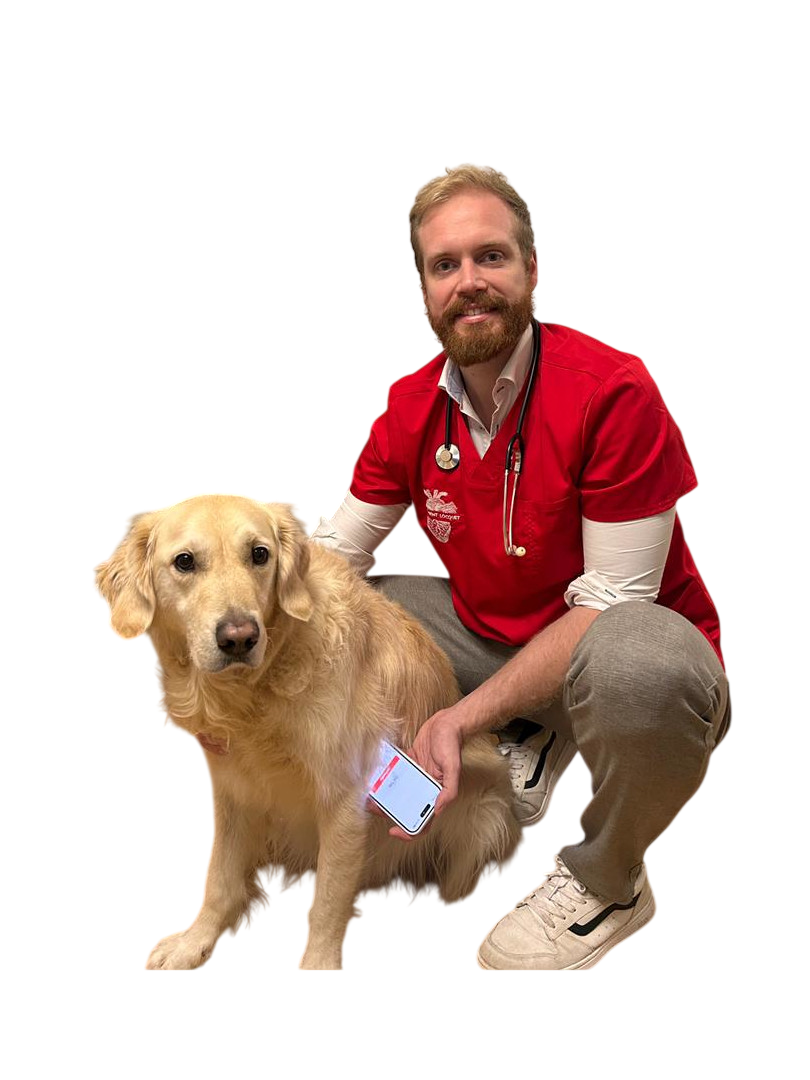
Medically reviewed by
Dr Laurent Locquet, DVM, PhD, Dipl. ECVIM-CA (Cardiology)
Veterinary cardiologist, Sonus Health Last reviewed September 25, 2026
Why the sleeping rate matters
While a dog sleeps, nothing else is pushing their breathing up. No heat, no excitement, no exercise. That makes the sleeping rate a clean reading of how hard their body is working at rest.
When the heart starts to struggle, fluid can build up in and around the lungs, and breathing at rest speeds up to compensate. A sleeping rate that climbs and stays up is often the first thing an owner can notice, which is why vets ask owners of dogs with a heart condition to count it at home.
Panting is different. Fast, open-mouthed breathing after a walk, on a warm day, or when your dog is excited or unsettled is usually normal. The count that matters is the one taken while they are asleep or fully relaxed.
When to contact a vet straight away
- Struggling to breathe, or breathing fast at rest
- Pale, blue or grey gums
- Collapse, or unable to get up
- Won't eat or drink, or seems distressed at rest
Listening between appointments
Hear what changes, between visits
Sonus Health turns your phone into a heart check you can do at home, as often as you like. You get heart rate, heart rate variability and a murmur screen in about a minute.
$2.99 for your first month, then $39.99 a year. Cancel anytime.
Common questions
Most healthy dogs breathe between about 15 and 30 times a minute while asleep or fully at rest. One count above 30 is not a diagnosis. A rate that climbs over several days and stays up is what is worth taking to your vet.
Not quite. Panting is fast, open-mouthed breathing, and a dog that pants at night may be too warm, uncomfortable, anxious or in pain. Mention it to your vet if it is new or keeps happening. The count on this page is for calm breathing while your dog is asleep.
Yes. Puppies breathe faster than adult dogs, and dogs of any age breathe faster and twitch during dreams. Count during deep, still sleep, and treat the ranges on this page as a guide for adult dogs.
Once while your dog is well gives you their normal. If your vet has found a murmur or another heart condition, they may ask you to count regularly, sometimes daily, and to bring the numbers to appointments. A written record of the trend is more useful to them than any one count.