Anzeichen eines Herzgeräuschs beim Hund
Wenn Ihnen gesagt wurde, Ihr Hund habe ein Herzgeräusch, oder Sie wegen der Rasse darauf achten, lautet die ehrliche Antwort: Das Herzgeräusch selbst hat keine Anzeichen. Beobachtenswert ist etwas anderes.
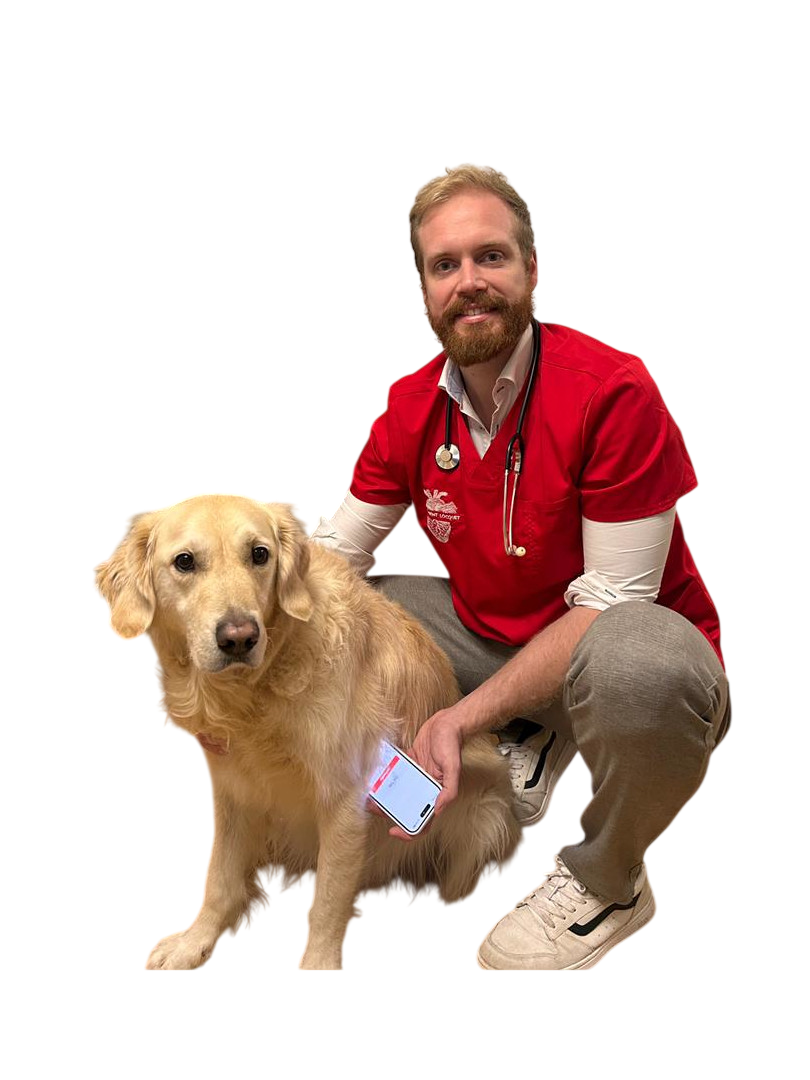
Medizinisch geprüft von
Dr. Laurent Locquet, DVM, PhD, Dipl. ECVIM-CA (Kardiologie)
Veterinärmedizinischer Kardiologe, Sonus Health Zuletzt geprüft am 3. September 2026
Ein Herzgeräusch ist ein Geräusch, kein Symptom
Ein Herzgeräusch ist ein Geräusch, das Ihre Tierarztpraxis durch das Stethoskop hört. Ihr Hund spürt es nicht, und für sich genommen erzeugt es nichts, was Ihnen zu Hause auffallen würde. Die meisten Herzgeräusche werden zufällig entdeckt, bei einem Termin aus ganz anderem Anlass.
Auffallen können dagegen die Anzeichen eines Herzens, das anfängt, stärker zu arbeiten. Die kommen später, falls sie überhaupt kommen, und viele Hunde mit einem Herzgeräusch entwickeln sie nie. Man sollte sie kennen, nicht um sich täglich zu sorgen, sondern um sie zu erkennen, falls sie auftreten.
Worauf Sie zu Hause achten können
Nichts davon bedeutet für sich genommen eine Herzerkrankung. Für jedes gibt es viele gewöhnliche Erklärungen. Wichtig sind sie als Muster und als Veränderung gegenüber dem, was für Ihren Hund normal ist.
Schnellere Atmung in Ruhe
Eine Atemfrequenz in Ruhe oder im Schlaf, die angestiegen ist und oben bleibt. Das ist das Nützlichste, was Sie zu Hause zählen können.
Atmung Ihres Hundes jetzt zählenSchneller müde als sonst
Langsamer werden auf einer vertrauten Runde, zurückbleiben oder früher als sonst stehen bleiben wollen.
Anhaltender Husten
Ein Husten, der immer wiederkommt, besonders nachts oder nach dem Hinlegen.
Ohnmacht oder Zusammenbruch
Jedes Schwanken, Zusammenbrechen oder Ohnmächtigwerden. Selten, und immer eher ein Anruf als ein Abwarten.
Weniger Appetit
Über mehrere Tage weniger fressen als sonst, besonders zusammen mit einem der anderen Punkte.
Wann Sie sofort tierärztlichen Rat brauchen
Bei manchen Anzeichen sollte man nicht abwarten. Kontaktieren Sie noch am selben Tag eine Tierarztpraxis, wenn Ihr Hund schwer atmet, im Ruhezustand oder im Schlaf schnell atmet, blasses, blaues oder graues Zahnfleisch hat, zusammenbricht oder ohnmächtig wird, oder unruhig wirkt und nicht zur Ruhe kommt.
Rassen, bei denen Herzgeräusche häufiger sind
Manche Rassen entwickeln deutlich häufiger ein Herzgeräusch, und das früher im Leben.
| Rasse | Häufigste Ursache |
|---|---|
| Cavalier King Charles Spaniel | Mitralklappenerkrankung |
| Dackel | Mitralklappenerkrankung |
| Chihuahua und kleine Terrier | Mitralklappenerkrankung |
| Boxer | Aortenstenose |
| Dobermann | Dilatative Kardiomyopathie |
Die Rassemuster folgen veröffentlichten tierkardiologischen Leitlinien. Einzelne Hunde unterscheiden sich, und eine Rasse auf dieser Liste ist keine Diagnose.
Abhören zwischen den Terminen
Hören Sie, was sich zwischen den Besuchen verändert
Sonus Health macht aus Ihrem Smartphone einen Herz-Check, den Sie zu Hause so oft durchführen können, wie Sie möchten. Sie erhalten Herzfrequenz, Herzratenvariabilität und ein Herzgeräusch-Screening in etwa einer Minute.
$2,99 im ersten Monat, danach $39,99 pro Jahr. Jederzeit kündbar.
Häufige Fragen
Ja, und das ist der Normalfall. Viele Hunde mit einem Herzgeräusch verhalten sich jahrelang völlig unauffällig. Das Fehlen von Anzeichen ist für den heutigen Tag beruhigend, aber kein Beleg dafür, dass das Geräusch unverändert bleibt. Deshalb möchten Tierärzte erneut abhören.
Für Tierärzte klingt ein Herzgeräusch durch das Stethoskop wie ein Rauschen oder Zischen zwischen oder über den normalen Herztönen. Wenn Sie Ihr Ohr an die Brust Ihres Hundes legen, werden Sie es nicht hören, und es gibt keine verlässliche Möglichkeit, es ohne Hilfsmittel zu hören.
Fast immer beim Abhören mit dem Stethoskop während eines Termins, der eigentlich einen ganz anderen Grund hatte, etwa eine Impfung oder ein Humpeln. Deshalb kommt ein Herzgeräusch so oft überraschend.
Cavalier King Charles Spaniels sind mit großem Abstand am häufigsten betroffen, gefolgt von anderen kleinen Rassen wie Dackeln, Chihuahuas und kleinen Terriern. Größere Rassen wie Dobermänner und Boxer neigen zu anderen Herzerkrankungen, von denen manche gar kein Herzgeräusch verursachen.
Die meisten gesunden Hunde atmen im Schlaf oder in völliger Ruhe etwa 15- bis 30-mal pro Minute. Wenn Sie das jetzt zählen, solange Ihr Hund gesund ist, haben Sie später einen Vergleichswert. Eine Ruheatemfrequenz, die ansteigt und oben bleibt, gehört zu dem Nützlichsten, was Besitzer zu Hause bemerken können.