Dog heart murmur grades, explained
If a vet has told you your dog has a grade 2, or a grade 4, the number is probably the part you have been turning over since. It is worth knowing what it measures, because it is narrower than most owners assume.
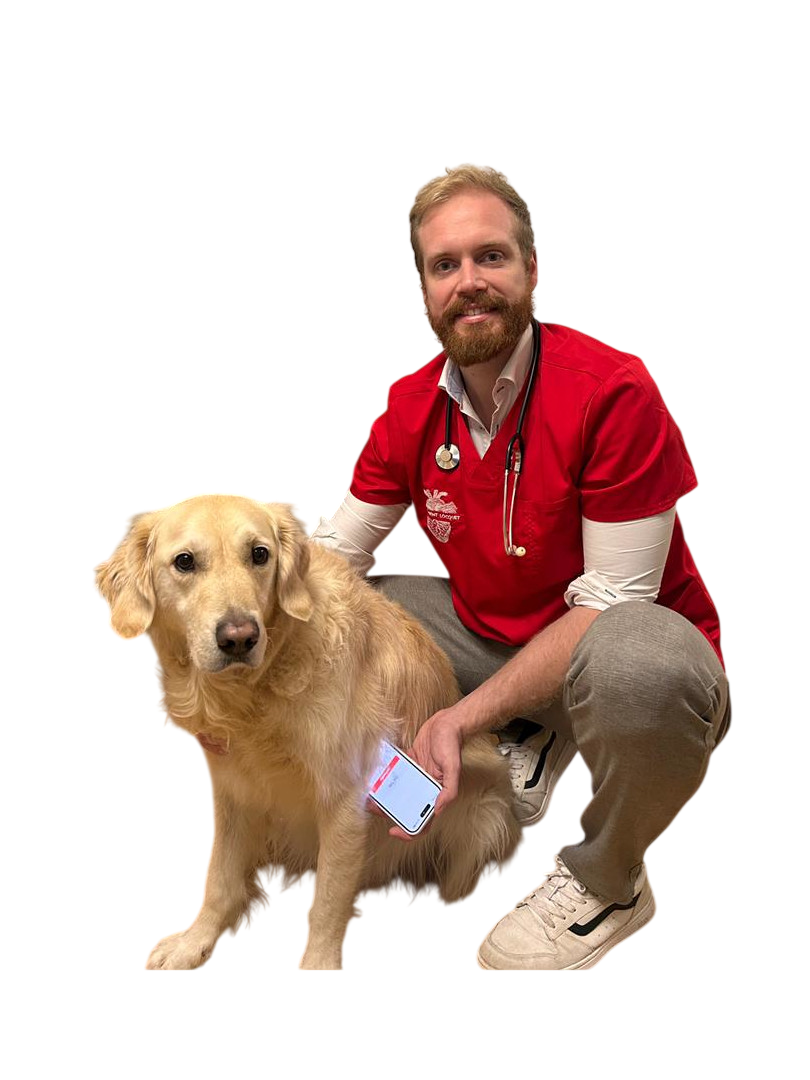
Medically reviewed by
Dr Laurent Locquet, DVM, PhD, Dipl. ECVIM-CA (Cardiology)
Veterinary cardiologist, Sonus Health Last reviewed September 03, 2026

A grade measures loudness, not severity
A murmur is the sound of turbulent blood inside the heart. The grade describes how loud that sound is through a stethoscope, and nothing else. It is not a measure of how damaged a valve is, how much the heart has changed shape, or how long your dog will live with it. A quiet murmur can come from a valve that is leaking significantly. A loud one can come from a heart that is coping well.
This surprises people, and it is the single most useful thing to understand about the number. Vets grade murmurs because it gives them a consistent way to describe a sound between appointments and between colleagues, not because the grade decides what happens next.
| Grade | How it is usually described |
|---|---|
| I | Very soft |
| II | Soft |
| III | Moderate |
| IV | Loud |
| V | Loud with a thrill |
| VI | Very loud with a thrill |
Grades follow the six-point scale used in veterinary cardiology. Different vets can grade the same heart a step apart, which is normal.
What actually decides the next step
If the grade does not decide what happens next, something else has to. That is usually an echocardiogram: an ultrasound scan of the heart that shows the valves moving, the chambers, and how well the heart is pumping. It is the test that separates a murmur worth watching from one that needs treating.
In the meantime, what your vet is really tracking is change. A murmur that stays the same for years is a different situation from one that has got louder since spring, and the same is true of your dog's resting breathing rate, their energy on walks, and their weight.
Breeds where murmurs are more common
Murmurs turn up in every kind of dog, but some breeds are far more likely to develop one, and to develop it earlier.
| Breed | Most common cause |
|---|---|
| Cavalier King Charles Spaniel | Mitral valve disease |
| Dachshund | Mitral valve disease |
| Chihuahua and small terriers | Mitral valve disease |
| Boxer | Aortic stenosis |
| Dobermann | Dilated cardiomyopathy |
Breed patterns follow published veterinary cardiology guidance. Individual dogs vary, and a breed on this list is not a diagnosis.
Listening between appointments
Hear what changes, between visits
Sonus Health turns your phone into a heart check you can do at home, as often as you like. You get heart rate, heart rate variability and a murmur screen in about a minute.
$2.99 for your first month, then $39.99 a year. Cancel anytime.
Common questions
Not on its own. A grade 2 murmur is quiet and easy to miss, but the grade describes how loud the sound is, not how much the heart is affected. Some grade 2 murmurs come from a valve that will need watching for years; some are harmless. What tells you which is a scan, not the number.
Yes, in both directions. A murmur can get louder as a valve leaks more, and a puppy murmur can disappear entirely. That is exactly why a single grade matters less than the direction of travel, and why your vet will often want to listen again rather than act immediately.
No grade automatically means treatment. Decisions come from what an echocardiogram shows about the size and function of the heart, along with your dog's age, breed and symptoms. A loud murmur in a dog with a structurally normal heart may need nothing but monitoring.
Often, yes. Many puppies have what vets call an innocent or physiological murmur that fades by about four to six months as they grow. Your vet will usually want to hear it again at the next appointment to confirm it has gone rather than assume it.
You can listen at home between appointments. A phone screen can indicate that heart sounds may need attention and track heart rate and heart rate variability over time, which is useful context to bring to your vet. It does not assign a grade, and it does not replace a stethoscope or a scan.